Featured
Table of Contents
- – The Depression Situation: When Hope Feels Out ...
- – Understanding Depression's Neurobiological Roots
- – Ketamine: A Revolutionary Mechanism for Depres...
- – Clinical Evidence: What the Study Reveals
- – Integrating Psychiatric Therapy: Beyond Medica...
- – EMDR for Depression's Origins
- – Accelerated Resolution Treatment for Depressi...
- – Internal Family Equipments for Self-Compassion
- – Therapy Methods: Framework and Practical Consi...
- – Past Drug Resistance: Who Profits Most?
- – Contrasting Ketamine to Typical Depression The...
- – Neuroplasticity: The Secret to Lasting Adjustment
- – Handling Expectations and Protecting Against R...
- – Security, Side Impacts, and Risk Monitoring
- – The Role of Set, Setting, and Therapeutic Par...
- – Long-Term Outcomes: What Does Recovery Resemble?
- – The Future: Expanding Gain Access To and Refin...
- – Verdict: A New Phase in Depression Treatment
The Depression Situation: When Hope Feels Out of Reach
Major depressive condition impacts over 21 million American grownups yearly, making it among the leading sources of handicap worldwide. The weight of depression prolongs far past despair-- it materializes as extensive emptiness, loss of passion in once-loved activities, squashing fatigue, problem focusing, rest disruptions, and in serious cases, self-destructive ideation. For those entraped in depression's grasp, every day can really feel like an insurmountable challenge, with also standard self-care jobs needing herculean initiative.
Traditional depression therapy follows a foreseeable but usually discouraging course. Patients try an SSRI or SNRI, wait 6-8 weeks to see if it works, change dosage, wait again, and if unsuccessful, switch to an additional medication and repeat the cycle. Weeks transform into months, months right into years, and really hope progressively deteriorates. Researches reveal that only regarding one-third of patients attain remission with their initial antidepressant, and with each subsequent trial, success prices decline. For those with treatment-resistant depression-- specified as failure to respond to at the very least 2 sufficient medication tests-- the prognosis becomes increasingly frustrating.
The human expense is startling. Depression damages jobs, relationships, and lives. It separates sufferers from loved ones, robs them of motivation and enjoyment, and in the most severe situations, causes self-destruction-- the tenth leading reason of fatality in the USA. The urgent demand for faster-acting, more efficient therapies has actually driven researchers to explore unique strategies, with Ketamine-Assisted Intensive Retreats becoming among the most promising advancements in years.
Understanding Depression's Neurobiological Roots
Depression is much even more than a chemical discrepancy or a shortage in serotonin, though that oversimplified version controlled psychiatry for years. Current neuroscience exposes depression as an intricate problem involving several brain systems, neurotransmitters, and structural changes.
The prefrontal cortex-- accountable for executive function, decision-making, and emotional guideline-- reveals lowered activity in depression. The hippocampus, vital for memory and mood guideline, typically presents reduced volume in people with chronic depression, especially those with a history of very early life stress and anxiety. The amygdala, the mind's emotional facility, comes to be hyperresponsive, producing heightened sensitivity to unfavorable stimuli and decreased responsiveness to positive experiences.
At the cellular level, depression entails loss of synaptic links-- the interaction factors between nerve cells. Persistent stress and depression cause atrophy of dendritic backs in vital brain regions, essentially pruning away the neural style needed for healthy mood law. This synaptic loss assists clarify why depression really feels so debilitating: the brain has literally lost some of its capacity to generate favorable feelings, inspiration, and cognitive flexibility.
Natural chemical systems past serotonin play important roles. Glutamate, the mind's primary excitatory natural chemical, reveals dysregulation in depression. The brain-derived neurotrophic variable (BDNF)-- a healthy protein vital for nerve cell growth and survival-- lowers in depression, further compromising the mind's capacity to keep healthy neural networks. Understanding these systems exposes why antidepressants that just target serotonin often supply incomplete alleviation and why treatments that advertise neuroplasticity and synaptic development hold such pledge.
Ketamine: A Revolutionary Mechanism for Depression Alleviation
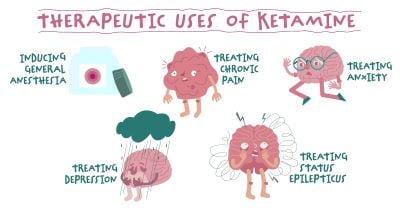
Ketamine stands for a basically different method to treating depression. Unlike conventional antidepressants that gradually enhance monoamine natural chemicals over weeks, ketamine works with the glutamate system and sets off fast changes in mind connectivity and function-- commonly within hours.
As an NMDA receptor villain, ketamine obstructs details glutamate receptors, setting off a waterfall of neurobiological occasions. This clog brings about increased glutamate launch in various other brain areas, activating AMPA receptors and triggering a signaling waterfall that promotes BDNF release and promotes quick synaptogenesis-- the development of new synaptic connections. Within hours of management, ketamine can increase the variety of dendritic backs in the prefrontal cortex, basically reconstructing a few of the neural design that depression has deteriorated.
Research using brain imaging has revealed that ketamine quickly boosts connectivity within key mind networks included in state of mind guideline. The default mode network-- typically over active in depression and related to rumination-- reveals stabilized task patterns. Connection between the prefrontal cortex and limbic regions boosts, enhancing emotional guideline capacity. These aren't simply momentary adjustments but show up to represent actual restructuring of mind feature that can persist well past the severe drug effects.
Maybe most extremely, ketamine's antidepressant results usually begin within hours to days as opposed to weeks. For a person in the depths of self-destructive depression, this fast start can be actually lifesaving. The speedy relief additionally gives hope and inspiration to involve with psychiatric therapy and various other therapies that could have really felt pointless before experiencing any kind of sign improvement.
Clinical Evidence: What the Study Reveals
The proof base for ketamine in treatment-resistant depression has actually grown substantially over the previous twenty years. First studies in the early 2000s showed that a solitary ketamine mixture can create fast antidepressant effects in people that had actually failed numerous traditional treatments. These findings were initially consulted with hesitation but have been replicated countless times across various proving ground and patient populations.
A site 2014 meta-analysis located that ketamine generated significant antidepressant effects within 24 hours in individuals with treatment-resistant depression, with action prices around 60-70%-- considerably higher than regular antidepressant response rates. Succeeding research study has actually examined repeated dosing protocols, discovering that numerous ketamine sessions over a number of weeks can extend and deepen the antidepressant action.
Research studies specifically checking out self-destructive ideation have revealed that ketamine can swiftly reduce self-destruction danger-- a finding with extensive clinical ramifications. Conventional antidepressants lug warnings about possibly increasing self-destruction threat in the first weeks of therapy, but ketamine shows up to minimize self-destructive ideas within hours, providing a vital security benefit for high-risk people.
Research right into ketamine-assisted psychotherapy-- combining ketamine with structured treatment instead of medication alone-- suggests also much more durable and sustained outcomes. The neuroplastic home window developed by ketamine appears to improve the effectiveness of psychiatric therapy, enabling patients to make restorative progress extra rapidly than with either treatment alone.
Integrating Psychiatric Therapy: Beyond Medication Alone
While ketamine mixtures alone can offer significant antidepressant impacts, the most sophisticated programs incorporate organized psychiatric therapy to make best use of and extend advantages. The short-lived neuroplastic state induced by ketamine produces an optimum home window for therapeutic work-- a time when new perspectives, habits, and neural patterns can be developed quicker.
EMDR for Depression's Origins
Many cases of depression have origins in past damaging experiences-- childhood years trauma, loss, rejection, or failure. These experiences produce negative core beliefs (" I wear," "Absolutely nothing will certainly ever before improve," "I'm essentially broken") that maintain depression also when current scenarios improve. EMDR Treatment Intensives assists clients reprocess these foundational memories, decreasing their psychological charge and enabling for more flexible viewpoints.
When combined with ketamine's neuroplastic results, EMDR can work with exceptional effectiveness. Memories that might take months to process in conventional once a week treatment may move significantly in just a few intensive sessions throughout the ketamine therapy home window. Individuals typically report that long-standing ideas about themselves or their lives transform as the memories underlying these beliefs are reprocessed and integrated in a different way.
Accelerated Resolution Treatment for Depressive Imagery
Depression involves not just adverse thoughts yet negative mental images-- scenes of previous failings, visualizations of bleak futures, or relentless pictures of loss and emptiness. These photos maintain depressive mood and cognitive patterns. Accelerated Resolution Treatment (ART) offers devices for changing this depressive images via volunteer image substitute.
The mix of ketamine and ART appears specifically powerful for depression. Ketamine might advance imagery that has been maintaining depression, while ART offers immediate tools for changing this content. The process can really feel revelatory-- clients see the pictures that have actually been subconsciously driving their state of mind and can proactively transform them, frequently experiencing immediate psychological changes.
Internal Family Equipments for Self-Compassion
Depression often includes harsh self-criticism and a broken feeling of self. Internal Family Systems Therapy (IFS) helps people comprehend their interior experience as entailing various "components"-- the depressed part that feels hopeless, the important component that assaults the self, the part that wants to provide up, and below them all, a core Self efficient in compassion and wisdom.
Ketamine shows up to promote access to Self-energy in manner ins which can be profoundly healing for depression. Many clients report that throughout ketamine sessions, they experience a perspective change-- all of a sudden able to observe their depression with concern rather than being completely understood it. This introduction of Self-awareness creates the possibility of connecting to depression differently, developing the internal sources to sustain as opposed to assault the depressed components. Assimilation work utilizing IFS aids clients keep this thoughtful position towards themselves, progressively moving the extreme inner setting that preserves depression.
Therapy Methods: Framework and Practical Considerations

Ketamine-assisted psychotherapy for depression generally starts with thorough psychological examination including depression intensity assessment, suicide threat screening, treatment history, and medical clearance. Medical professionals evaluate whether depression is the main problem or secondary to other concerns like bipolar illness, which requires various therapy approaches.
The ketamine management stage most generally uses intravenous mixture (0.5 mg/kg over 40 minutes), though intramuscular shot and sublingual lozenges are additionally used. IV management permits for precise application and surveillance, which lots of medical professionals like for depression treatment. The mixture takes place in a comfortable establishing with very little exterior stimulation-- soft illumination, songs, and typically eyeshades to help with an inward emphasis.
Therapy frequency varies by protocol. Numerous programs begin with 2 infusions per week for 2-3 weeks (overall of 4-6 sessions), discovering this regularity optimum for structure and preserving antidepressant effects. Some extensive retreat programs provide therapies more frequently over 1-2 weeks. The trick seems maintaining healing momentum while enabling sufficient assimilation time between sessions.
Assimilation sessions adhering to each ketamine management provide critical psychotherapeutic job. These sessions might last 60-90 mins and concentrate on handling insights from the medication experience, addressing emerging material utilizing EMDR, ART, or IFS, developing behavioral activation strategies to counteract depressive withdrawal, and structure abilities for keeping improvements. The assimilation job transforms short-lived neurobiological shifts into long-term mental and behavioral change.
Past Drug Resistance: Who Profits Most?
While ketamine-assisted psychiatric therapy was initially studied mostly in treatment-resistant depression, medical experience recommends more comprehensive applications. Those that have failed numerous antidepressant tests represent perfect prospects-- they have one of the most to get from a therapy with a novel device of activity. Individuals with serious depression and energetic self-destructive ideation may benefit from ketamine's fast results, possibly stabilizing crisis scenarios that might otherwise need hospitalization.
Depression with considerable stress and anxiety signs and symptoms may respond specifically well to ketamine, as the therapy addresses both conditions simultaneously. Those whose depression includes significant rumination-- repetitive adverse thinking that feels difficult to close off-- frequently report that ketamine provides the very first mental quiet they have actually experienced in years, producing room for various thought patterns to develop.
Individuals whose depression has clear roots in past trauma or damaging experiences might benefit particularly from integrating ketamine with EMDR, as this addresses the underlying memories and ideas maintaining depression. Those with harsh self-criticism as a famous attribute could respond well to ketamine plus IFS work, establishing the self-compassion that provides a foundation for sustained recuperation.
However, ketamine isn't appropriate for everyone. Those with unrestrained high blood pressure, current cardiovascular disease, or active psychosis typically should not obtain ketamine. Individuals with energetic compound use conditions call for cautious examination, as ketamine itself lugs misuse possibility. Individuals with bipolar condition requirement specialized methods and close tracking, as ketamine can possibly cause manic episodes.
Contrasting Ketamine to Typical Depression Therapies
Standard antidepressants-- SSRIs, SNRIs, tricyclics, and MAOIs-- work by enhancing accessibility of monoamine natural chemicals, largely serotonin and norepinephrine. They call for weeks to get to effectiveness, supply complete remission in just concerning one-third of individuals, and typically trigger negative effects consisting of sexual dysfunction, weight gain, psychological blunting, and discontinuation signs when quiting.
Psychiatric therapy alone, particularly cognitive-behavioral treatment (CBT) and social treatment, has solid evidence for dealing with moderate to moderate depression. Severe depression frequently hinders the cognitive versatility and motivation needed to fully engage with treatment. Several significantly depressed patients do not have the power or focus to finish treatment research or execute behavioral modifications.
Electroconvulsive therapy (ECT) continues to be the most effective therapy for severe, treatment-resistant depression, with action rates around 70-80%. ECT requires basic anesthesia, creates temporary memory disability, and brings considerable preconception that protects against many individuals from considering it. Transcranial magnetic excitement (TMS) provides a less intrusive choice but requires daily sessions for 4-6 weeks and has a lot more moderate efficacy than ECT.
Ketamine-assisted intensive retreats supply numerous prospective advantages over these alternatives. The rapid beginning offers hope and inspiration when patients are most helpless. The neuroplastic results attend to depression's underlying synaptic pathology instead of just natural chemical degrees. The mix with intensive psychiatric therapy profits from the boosted understanding ability ketamine creates. The compressed timeline-- usually 1-2 weeks versus months of therapy-- aspects patients' time and keeps healing energy.
The primary constraints are cost (typically $3,000-$ 10,000 for therapy training courses, hardly ever covered by insurance), restricted geographic availability, and a smaller sized proof base than traditional therapies, though this is quickly increasing.
Neuroplasticity: The Secret to Lasting Adjustment
The most exciting facet of ketamine for depression might be its neuroplastic effects-- the promo of new neural links that enable essentially different patterns of reasoning, feeling, and behaving. Standard antidepressants largely take care of signs; ketamine shows up to facilitate actual brain changes that can linger past severe treatment.
Study demonstrates that ketamine's results on synaptogenesis happen within hours and can last days to weeks. This develops an important home window where the mind is specifically malleable and responsive to developing new patterns. Restorative work during this home window-- cognitive restructuring, memory reprocessing, behavior activation, skill building-- gets encoded more deeply and successfully than it could or else.
For clients, this equates to experiencing changes that feel qualitative instead than simply quantitative. Rather than depression training progressively via laborious application of dealing abilities, lots of explain abrupt viewpoint changes, spontaneous returns of interest and enjoyment, or rediscovery of elements of themselves they would certainly neglected existed. These aren't just symptom enhancements yet reflect real adjustments in brain structure and function.
The neuroplastic home window also clarifies why assimilation job is so essential. Ketamine develops the problems for modification, yet patients need to proactively build brand-new patterns to occupy the neural area that depression previously loaded. This means exercising brand-new point of views, taking part in activities that were previously stayed clear of, establishing self-compassion, and slowly restoring the life that depression had actually restricted.
Handling Expectations and Protecting Against Relapse
While ketamine's quick results can feel remarkable, taking care of expectations appropriately is crucial for long-lasting success. Not every person responds to ketamine-- reaction rates around 60-70% mean that 30-40% don't experience considerable renovation. Even amongst responders, the deepness and period of feedback varies significantly. Some attain full remission that lingers forever; others experience partial improvement that requires maintenance treatment.
The first antidepressant action to ketamine commonly takes place within hours to days, yet this fast lift might be complied with by progressive signs and symptom return over days to weeks. This is why most procedures entail several sessions-- repetitive management shows up to strengthen and expand the antidepressant effects. Some patients require routine maintenance sessions (monthly or quarterly) to maintain remission, similar to how some depression patients call for recurring antidepressant medication.
Aspects affecting sturdiness of reaction include top quality of integration job, continued technique of new patterns and actions, recurring life stressors, social support, sleep quality, exercise, and nutrition. Ketamine creates a possibility for change, however maintaining that adjustment requires continuous interest and effort. Those who check out ketamine as the beginning of recovery rather than an one-time fix tend to preserve enhancements most effectively.
Relapse avoidance preparation should start throughout the intensive therapy stage. This consists of identifying early indication of depression returning, creating activity prepare for taking care of these indications, developing continuous assistance systems (continued treatment, support system, trusted relationships), and establishing criteria for maintenance ketamine sessions if required.
Security, Side Impacts, and Risk Monitoring
Ketamine has been made use of securely as a medical anesthetic for over half a century, offering considerable information on its security profile. At the sub-anesthetic doses used for depression therapy, significant damaging occasions are uncommon. One of the most typical negative effects are short-term and fix quickly after administration ends.
Throughout treatment, clients generally experience dissociation-- feelings of detachment from body or surroundings-- which is part of ketamine's device but can be unsettling for some. Cautious preparation and a helpful healing environment help individuals browse this experience proficiently. Various other typical effects consist of mild boosts in high blood pressure and heart rate (calling for surveillance but rarely bothersome), queasiness (usually reduced by anti-nausea pre-medication), and lightheadedness or moderate confusion during and immediately after management.
Cardiovascular factors to consider call for focus. Ketamine causes short-lived boosts in blood stress and heart price, contraindicated for those with unchecked high blood pressure, current cardiovascular disease, or unsteady angina. Nonetheless, for clients with regulated or no heart disease, the rises are generally mild and well-tolerated with tracking.
Emotional effects require cautious administration. People with psychotic conditions ought to usually not get ketamine, as it can potentially aggravate psychotic signs and symptoms. Those with bipolar affective disorder need specialized methods and close monitoring for emergent mania. A small percentage of individuals experience tough or traumatic experiences throughout sessions-- difficult emotional product arising, sensations of confusion or fear-- though with knowledgeable restorative support, these experiences frequently confirm therapeutically beneficial.
Abuse potential exists, particularly for individuals with compound usage disorder histories. Medical ketamine protocols differ dramatically from leisure use-- lower dosages, monitored administration, therapeutic setup and assistance, assimilation job. These aspects avoid the pattern of intensifying unsupervised usage that characterizes dependency. Nevertheless, programs meticulously screen applicants and screen for any signs of troublesome use.
The Role of Set, Setting, and Therapeutic Partnership
Ketamine therapy outcomes are affected not simply by pharmacology but by psychological and ecological elements. "Set"-- the individual's attitude, expectations, and mental preparation-- shapes how the ketamine experience unfolds and what meaning it holds. "Establishing"-- the physical setting and high quality of restorative partnership-- provides the container for risk-free exploration and healing.
Optimal collection includes preparing individuals for the ketamine experience with clear information about what to expect, developing therapeutic intents, dealing with worries or misconceptions, and growing an attitude of inquisitiveness and visibility. Clients who come close to ketamine as a tool for recovery and development instead than an easy fix have a tendency to engage even more successfully with both the medicine experience and integration job.
Setting for depression therapy must feel risk-free, comfortable, and supportive instead of medical or institutional. Private therapy rooms with flexible illumination, comfortable seats or reclining options, and minimal clinical devices visible aid develop emotional safety. Songs choice-- usually ambient, crucial items-- supports an internal emphasis without being intrusive.
Perhaps most crucial is the high quality of restorative connection. The specialist acts as support and overview-- existing, attuned, non-judgmental, prepared to provide assistance if tough product emerges but enabling the patient's process to unfold normally. Count on this partnership enables patients to allow go of protective control and check out tough mental region. Several individuals explain the combination of ketamine's pharmacological results and the specialist's caring existence as producing problems for healing that neither element alone can give.
Long-Term Outcomes: What Does Recovery Resemble?
Depression recuperation through ketamine-assisted psychiatric therapy hardly ever adheres to a linear path. First quick renovation might be followed by changes as old patterns reassert themselves and brand-new patterns slowly enhance. Understanding this natural process assists protect against frustration when the first "honeymoon" period provides way to the recurring job of keeping change.
Temporary results-- measured over weeks to months-- typically show significant renovation. Patients report raised state of mind, increased power and motivation, minimized rumination, boosted sleep, restored rate of interest in activities, and boosted capacity to experience pleasure. Self-destructive ideation normally reduces swiftly, providing prompt security advantages. These modifications enable individuals to engage extra properly with treatment, connections, and life tasks that depression had actually made impossible.
Longer-term results-- measured over months to years-- reveal more variability. Some people attain continual remission after a solitary intensive treatment program, needing no further ketamine though usually continuing with upkeep treatment or lifestyle methods. Others call for regular maintenance ketamine sessions to maintain remission, comparable to exactly how some depression individuals need ongoing antidepressant drug. Still others experience considerable yet incomplete renovation, viewing ketamine as one beneficial component of continuous depression administration.
Research following people for 6-12 months after ketamine treatment shows that many keep scientifically meaningful enhancements, though some sign return is usual. Aspects associated with sustained recuperation consist of top notch integration job throughout therapy, proceeded therapy or assistance after the extensive phase, dealing with life scenarios that add to depression, maintaining healthy and balanced way of life factors (rest, exercise, nutrition, social link), and having sensible expectations about healing as an ongoing process rather than a single event.
The Future: Expanding Gain Access To and Refining Therapy
Ketamine for depression stands at a critical time. The evidence base has expanded significantly, clinical experience has actually accumulated, and client demand is high. Substantial barriers remain to extensive implementation-- cost, limited insurance protection, geographic gain access to constraints, and require for specialized training and centers.
Research study proceeds to resolve important concerns. What are the optimum application protocols for various person populaces? Which people profit most from ketamine? What combination of psychotherapy modalities takes full advantage of outcomes? Just how can we predict who will react and who won't? What maintenance approaches best maintain improvements? These concerns will be answered via proceeded study and cautious professional monitoring of outcomes.
Training programs are arising to instruct medical professionals how to safely and successfully integrate ketamine into depression therapy. Expert organizations are creating technique guidelines and requirements of treatment. The framework for liable ketamine therapy continues to increase, with more facilities supplying therapy within honest, evidence-based structures.
Insurance policy insurance coverage stays a significant challenge. Many plans don't cover ketamine for depression regardless of growing evidence of efficacy and cost-effectiveness. As research demonstrates that ketamine can lower depression-related special needs, emergency space visits, hospitalizations, and self-destruction attempts, coverage may increase. Some advocacy teams are working to enlighten insurance companies and policymakers about ketamine's capacity to reduce lasting medical care costs while enhancing end results.
The development of esketamine (Spravato)-- an FDA-approved nasal spray ketamine formulation-- has developed brand-new opportunities and challenges. While FDA approval promotes insurance protection and legitimizes ketamine for depression, the authorized procedure is extra limited than several ketamine-assisted psychiatric therapy programs, concentrating largely on medication without the intensive healing assimilation that appears to boost and prolong advantages.
Verdict: A New Phase in Depression Treatment
For as well long, depression treatment has actually followed a frustratingly sluggish, trial-and-error procedure-- trying drugs sequentially, waiting weeks for each one to possibly work, viewing hope deteriorate with each failed effort. Ketamine-assisted intensive retreats deal something fundamentally different: rapid relief that can damage the cycle of despondence, neuroplastic changes that deal with depression's underlying biology, and boosted understanding to psychotherapy that speeds up recovery.
By combining ketamine's neurobiological results with evidence-based treatments like EMDR, ART, and IFS, this technique addresses depression adequately-- fixing synaptic links, recycling terrible memories, changing depressive images, and establishing self-compassion. The extensive layout presses what could take months or years into weeks, maintaining energy and avoiding the discouragement that accompanies sluggish, incremental progression.
For those struggling with treatment-resistant depression-- who have actually attempted numerous medications without alleviation, who have actually spent years in treatment making minimal progression, who have actually started to shed hope that life can feel different-- ketamine-assisted psychotherapy offers a genuine choice. Not a remedy, but a powerful tool that, incorporated with experienced therapy and dedicated assimilation work, can help people emerge from depression's darkness into restored opportunity.
The future of depression therapy is developing, and ketamine-assisted techniques represent a significant part of that development. As research study proceeds, accessibility expands, and methods improve, more people might discover the alleviation they have actually been desperately seeking-- the opportunity of experiencing joy again, of engaging completely with life, of remembering that they are past their depression. For those entraped in treatment-resistant depression, this new paradigm provides what might be most valuable: hope.

Table of Contents
- – The Depression Situation: When Hope Feels Out ...
- – Understanding Depression's Neurobiological Roots
- – Ketamine: A Revolutionary Mechanism for Depres...
- – Clinical Evidence: What the Study Reveals
- – Integrating Psychiatric Therapy: Beyond Medica...
- – EMDR for Depression's Origins
- – Accelerated Resolution Treatment for Depressi...
- – Internal Family Equipments for Self-Compassion
- – Therapy Methods: Framework and Practical Consi...
- – Past Drug Resistance: Who Profits Most?
- – Contrasting Ketamine to Typical Depression The...
- – Neuroplasticity: The Secret to Lasting Adjustment
- – Handling Expectations and Protecting Against R...
- – Security, Side Impacts, and Risk Monitoring
- – The Role of Set, Setting, and Therapeutic Par...
- – Long-Term Outcomes: What Does Recovery Resemble?
- – The Future: Expanding Gain Access To and Refin...
- – Verdict: A New Phase in Depression Treatment
Latest Posts
Individual vs Shared Therapeutic Retreats in Northampton
Cognitive Processing in Internal Family Systems (IFS)
Synaptic Rewiring and Sustained Healing: How Ketamine Creates Enduring Results
More
Latest Posts
Individual vs Shared Therapeutic Retreats in Northampton
Cognitive Processing in Internal Family Systems (IFS)
Synaptic Rewiring and Sustained Healing: How Ketamine Creates Enduring Results